
5G RedCap vs. LTE: When Is RedCap the Right Choice for Embedded IoT?
Decision-Making Guide for Developers and Device Manufacturers
Applications, Differences, and Selection Criteria for 5G RedCap Modules
Choosing the right wireless technology is a strategic decision for embedded IoT and M2M projects. It’s not just about the maximum data rate. The technology also affects hardware design, power supply, antenna design, certification, product lifespan, and unit costs.
For many applications, the main options to date have been established LTE modules or high-performance 5G modules. Traditional LTE is mature, widely available, and economically attractive. Full-featured 5G, on the other hand, offers high data rates and a wide range of features, but is technically and economically overkill for many industrial devices. 5G RedCap bridges the gap between these two performance classes.
Contents
2. Why is 5G RedCap relevant for embedded applications?
3. The Gap Between NB-IoT, LTE, and Full 5G
4. 5G RedCap or LTE: When Is RedCap Worth It?
5. For which embedded applications is 5G RedCap suitable?
6. Network Availability: Evaluate 5G Standalone Early On
7. 5G RedCap Modules in the m2m Germany Shop
8. Key Selection Criteria for 5G RedCap Modules
9. Conclusion: RedCap as a Pragmatic Middle Ground for Embedded IoT
What is 5G RedCap?
5G RedCap stands for “Reduced Capability” and refers to a reduced device class within 5G New Radio. The technology is therefore often referred to as 5G NR-Light. It is intended for devices that do not require maximum data rates, complex multiple-input multiple-output (MIMO) systems, or the full range of features offered by high-performance 5G devices.
The technical foundations were standardized in 3GPP Release 17, which was functionally completed in March 2022. RedCap extends 5G to include a device class for moderate requirements, such as industrial embedded systems, gateways, monitoring solutions, human-machine interfaces (HMIs), mobile devices, or connected machines.
“Reduced Capability” does not mean that RedCap is an inferior form of 5G. Rather, it primarily reduces features and performance reserves that many IoT and M2M devices do not need. Compared to full-featured 5G, this makes it possible to develop simpler, more compact, and potentially more energy- and cost-efficient devices.
Which features are reduced in 5G RedCap?
Among the key simplifications are the following:
- a lower maximum channel bandwidth, typically up to 20 MHz in 5G FR1
- fewer receive and transmit antennas, as well as fewer MIMO layers
- lower maximum data rates than those of high-performance 5G modems
- lower latency, close to 5G
- reduced requirements for computing power and signal processing
- Optional energy-saving features for longer periods of inactivity
- overall lower device and integration complexity
The actual benefits in terms of cost, power consumption, and form factor depend on the specific chipset, module, network operation, and application profile. RedCap is not automatically more cost-effective than NB-IoT or LTE-M; rather, it offers cost savings primarily when compared to high-performance 5G solutions.
Why is 5G RedCap relevant for embedded applications?
For developers, the download rate isn't the only factor that matters. What's crucial is whether a module can be reliably integrated into the product and remain available throughout its planned lifecycle. Therefore, the following questions—among others—should be addressed early in the development process:
- What data rates and response times does the application actually require?
- Which interfaces and module formats are compatible with the hardware design?
- What are the power consumption and peak loads of the power supply?
- How complex is antenna and RF design?
- Which frequency bands must be supported in the target markets?
- Is an LTE fallback required for areas without RedCap coverage?
- What network operator, state, and product certifications are required?
- What drivers, operating systems, and software features are available?
Industrial products often remain in the field for many years. The choice of a cellular module therefore affects circuit board layout, enclosures, antennas, certification, software, availability, and maintenance. RedCap offers an additional option here, bridging the gap between low-power cellular, traditional LTE, and full 5G.
The Gap Between NB-IoT, LTE, and Full 5G
Each mobile communication technology meets a different set of requirements. Therefore, there is no single “best” solution.
The following table is intended as a general guide. The actual data rates, latencies, transmission times, and network functions depend on the module, frequency band, network operator, service plan, reception conditions, and device configuration.
| Technology | Typical Profile | typical latency | Strengths | Typical Applications |
|---|---|---|---|---|
| Full 5G | Very large amounts of data and high functional requirements | < 10 ms (no noticeable delay, "real time") | High data rates, comprehensive 5G features | High-end routers, video, FWA, data-intensive industrial applications |
| 5G RedCap | Moderate to high data volumes, new 5G SA designs | ~10–20 ms (ideal) bis zu <100 ms (geringe Verzögerung, nahe an 5G, „quasi Echtzeit“) | Reduced 5G complexity, modern network architecture, LTE fallback depending on the module | Industrial gateways, monitoring, HMIs, vehicles, energy |
| LTE/4G (Broadband) | Large amounts of data, consumer and business devices | ~20–50 ms (slight delay) | High bandwidth, low latency, and broad device and network availability | Video Streaming, Routers/CPEs, VoIP |
| LTE Cat 1 / Cat 4 | Moderate data volumes, established embedded designs | ~50–100 ms (moderate delay) | High grid readiness, wide selection of modules, proven integration | Gateways, routers, machines, terminals |
| LTE-M | Small to medium-sized data sets, mobile devices | ~50–100 ms (moderate delay) | Mobility, moderate data rate, power-saving features | Tracking, Telemetry, Mobile Sensors |
| NB-IoT | Very small amounts of data, long periods of inactivity | ~1–10 seconds (long delay) | Low power consumption, good penetration through buildings | Counters, simple sensors, stationary status reports |
5G RedCap or LTE: When Is RedCap Worth It?
5G RedCap does not automatically replace LTE. This standard remains a suitable and cost-effective wireless technology for many embedded and M2M applications. However, for new developments with a long product lifecycle, it is worth including RedCap in the evaluation.
RedCap is particularly interesting when …
- a new product or a new generation of devices is being developed,
- the application requires more power than NB-IoT or LTE-M,
- Full 5G would be technically or economically excessive,
- moderate data rates are sufficient for updates, telemetry, monitoring, or remote access,
- the product is to be designed for a 5G SA architecture in the long term,
- Features such as private 5G networks or network slicing may be relevant in the future,
- a modular migration from LTE to RedCap is planned,
- LTE fallback can ensure coverage outside of supported RedCap networks.
LTE is often the better choice when …
- an existing and already certified LTE design works reliably,
- Unit costs and short-term availability are top priorities,
- the application does not benefit from a 5G SA architecture,
- the target markets or network operators do not yet provide sufficient support for RedCap,
- it is necessary to move quickly to mass production without an extensive redesign,
- A wide selection of LTE modules that have been tried and tested over many years is needed.
The key question, therefore, is not simply “RedCap or LTE,” but rather:
Which wireless technology is best suited to the specific product's data requirements, target market, life cycle, budget, and integration effort?
For which embedded applications is 5G RedCap suitable?
Industrial Control Systems and Machine Integration
Machines and systems generate operational, diagnostic, and condition data. RedCap may be a suitable option when this data needs to be transmitted reliably without requiring the bandwidth of a full 5G module.
Edge devices and industrial gateways
Gateways collect data locally, preprocess it, and transmit the results to cloud or backend systems. For this mid-range performance class, RedCap can offer a suitable combination of 5G connectivity, reduced device complexity, and low latency.
Mobile Machinery and Special-Purpose Vehicles
For construction equipment, municipal vehicles, service fleets, and off-highway applications, the focus is on telemetry, remote maintenance, operational data collection, and condition monitoring. RedCap is a compelling option when mobility, moderate data rates, and a long-term 5G strategy come together.



HMI, Display, and Control Devices
Professional HMIs and display systems require connectivity for updates, monitoring, content synchronization, and service access. RedCap could offer a new option for device generations designed for 5G SA.
Security and Monitoring Systems
Depending on the application, access control solutions, alarm systems, IP-based surveillance, and decentralized monitoring devices require more power and lower latency than traditional low-power sensors, but they do not necessarily require full 5G.
Energy and Infrastructure Technology
Control cabinets, decentralized systems, energy monitoring, and technical infrastructure all benefit from a reliable cellular connection. RedCap can combine 5G functionality with manageable module complexity.



Network Availability: Evaluate 5G Standalone Early On
RedCap is part of 5G New Radio and operates on standalone 5G networks. Therefore, an existing 5G signal or good 5G coverage alone does not automatically mean that RedCap is available in the desired plan, frequency band, and service area.
The market is evolving rapidly: According to the GSA, as of March 2026, 42 network operators in 27 countries worldwide had invested in RedCap. In Germany, the first operators had launched commercial RedCap services by that time. For a specific project, however, support should always be coordinated with network operators, SIM providers, and module manufacturers and tested in the target area.
Practical Tip for Evaluation
Before deciding on a RedCap module, you should at least consider the target network, frequency bands, rate plan, roaming, LTE fallback, and certification requirements together. A lab test alone is no substitute for testing in the actual deployment environment.
5G RedCap Modules in the m2m Germany Shop
m2m Germany offers a variety of 5G RedCap modules for evaluation and integration. Potential applications range from industrial gateways to security and monitoring systems, as well as automotive applications and energy technology.
Depending on the hardware design, various form factors are available. This allows RedCap to be integrated into both new PCB designs and modular systems. Below, we present three modules.
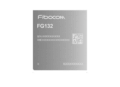
FG132 5G RedCap LGA Module
Suitable for new, compact embedded designs with direct PCB integration; compatible with the Fibocom NL668 Cat 4 series and MC116 Cat 1 series. The LGA package allows for seamless integration into the end device. It is particularly well-suited for mass-produced products where space constraints, unit costs, and a custom hardware layout are key considerations. For industrial gateways, security monitoring, fixed wireless access terminals, in-vehicle installations, and energy applications.
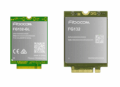
FG132 5G RedCap M.2 Module
Suitable for industrial routers, industrial PCs, IP cameras, IoT gateways, terminals, and other systems with an M.2 slot. The M.2 form factor simplifies development, replacement, and maintenance. It is a good choice when a modular cellular solution or rapid evaluation is desired without a permanently soldered wireless module.
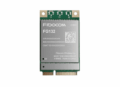
FG132 MiniPCIe Module
Suitable for existing platforms, gateways, or industrial hardware with a miniPCIe slot. The miniPCIe version can facilitate integration into systems that are already based on this established slot format. This may allow RedCap to be evaluated without having to completely redesign the host hardware.
Key Selection Criteria for 5G RedCap Modules
When selecting a module, it's not just about the cellular standard. The key factor is whether the specific model is compatible with the product design, operating system, and target market:
- Supported 5G NR and LTE frequency bands
- 5G Standalone Support and LTE Fallback
- Package Type, Dimensions, and Pin Compatibility
- Interfaces such as USB, PCIe, and UART
- Antenna Connections and RF Design Requirements
- GNSS and other additional features of the respective model
- Drivers and support for the operating system in use
- Operating and Storage Temperature Range
- Country, Network Operator, and Product Certifications
- Lifecycle, Availability, and Migration Options
- Documentation, Evaluation Kits, and Development Support
Standard features and specific module characteristics should be clearly distinguished: Not every RedCap module automatically offers the same frequency bands, interfaces, certifications, or additional functions. The current data sheet and the selected product variant are always the determining factors.
Conclusion: RedCap as a Pragmatic Middle Ground for Embedded IoT
5G RedCap offers device manufacturers an additional option for equipping new embedded IoT products with 5G connectivity without having to deal with the full complexity of a high-performance 5G module. The technology is particularly well-suited for applications with moderate data rates, professional requirements, and a long product lifecycle.
However, RedCap is neither a blanket replacement for LTE nor the ultimate solution for every IoT sensor. For very small amounts of data and long battery life, NB-IoT or LTE-M are often more suitable. For established designs, high network maturity, and a strong focus on cost, traditional LTE may still be the best choice. Data-intensive applications, on the other hand, may require full 5G.
For developers and device manufacturers, it is therefore worthwhile to conduct an early, technology-neutral evaluation. Anyone planning a new product generation today should consider 5G RedCap as a possible option and evaluate the network, module, antenna, software, and certification together from the very beginning. By using LTE fallback, it is already possible to deploy a RedCap module today and be RedCap-ready as soon as the network supports the technology.
Are you planning a new embedded IoT product?
m2m Germany provides support in selecting suitable 5G RedCap modules—as well as other wireless modules—in designing antenna solutions, and in integrating them into industrial IoT and M2M products—from technical evaluation through implementation.
Cyber Resilience Act: The 5 Most Important Questions for Procuring IoT Hardware
The first CRA requirements will take effect in September 2026, and the regulation will be fully in effect as of December 2027. We provide answers to the 5 most important questions. Many companies…

m2m Germany and Techship Launch Sales Partnership for the DACH Region
m2m Germany GmbH and Techship AB, leading providers of IoT products and services, announce a partnership in the DACH region (Germany, Austria, Switzerland). With this…

dnt Innovation Visits m2m Germany
Last week, we had the pleasure of welcoming our partner, dnt Innovation, to our office. Our regular partner meetings are an important opportunity to strengthen our relationship…